

[Updated introduction: 10 June 2026].
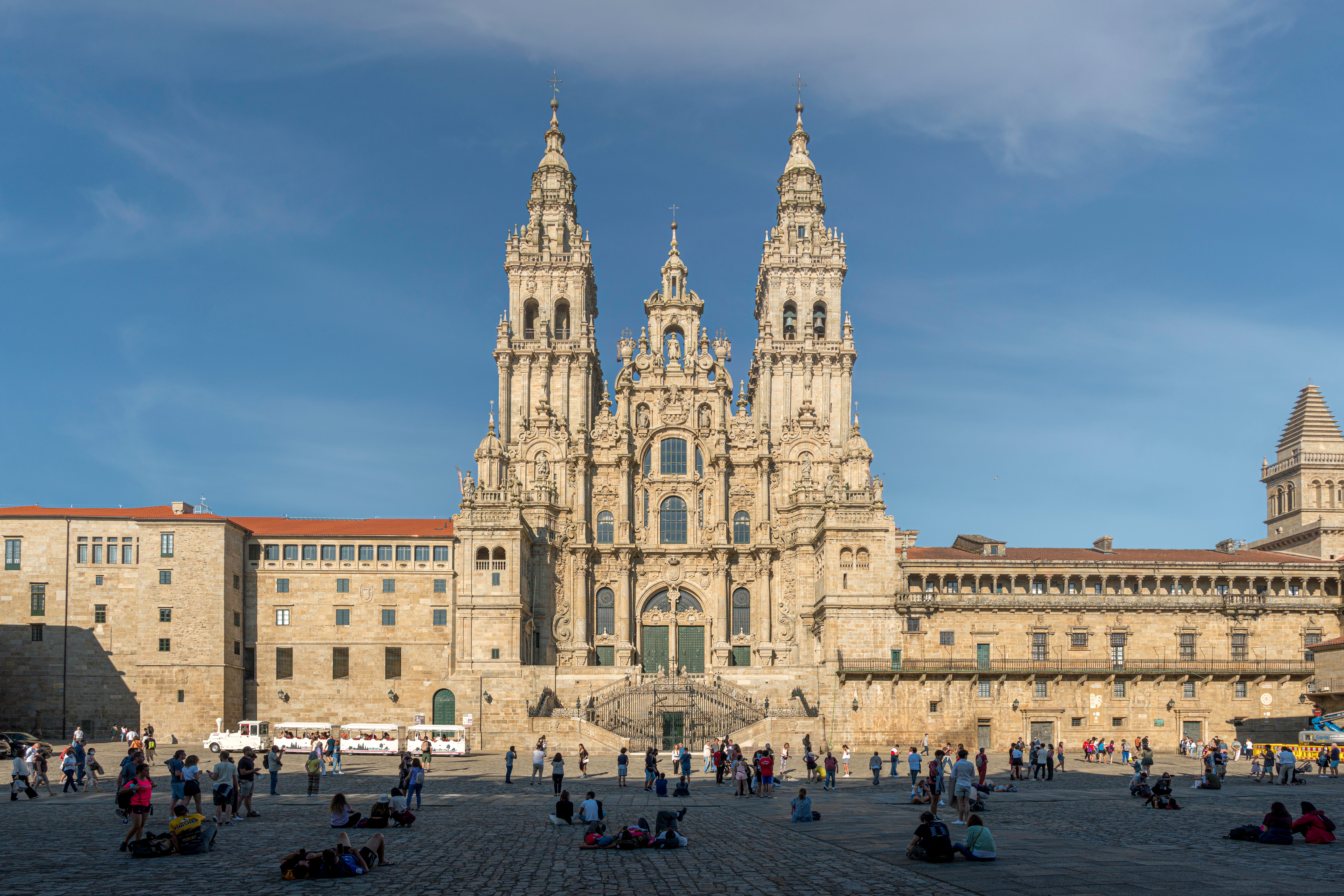
Santiago de Compostela, located in the Galicia region of northwest Spain, is arguably the most prominent Christian pilgrimage site in the Iberian Peninsula, containing a shrine of Saint James (one of Christ’s apostles). The site’s prominence as a pilgrimage site goes back to medieval times. But beyond being a pilgrimage destination, Santiago de Compostela constitutes a Catholic archdiocese (i.e. a geographical unit headed by an archbishop), first established in 1120 CE. During the Middle Ages, archdioceses and smaller dioceses (headed by bishops) would often seek to delineate their territorial boundaries and the extent of their authority. One way of trying to assert legitimacy would be to trace the purported historical roots of an archdiocese/diocese.
It is in this light that one should understand the Chronicon Iriense (‘Iriensian Chronicle’) that is the subject of this post. The text is a brief chronicle that outlines the history of Santiago de Compostela as a diocese, beginning with its precursor of Iria Flavia (hence the corresponding adjective ‘Iriense’) that reputedly originated as a settlement established by a Trojan princess and was granted diocese status by the Suevi king Mirus (aka Miro) in the sixth century CE, with a certain Andreas named as the first bishop. An unbroken line of successor bishops then followed up to a certain Theodemir, to whom the site of Saint James’ tomb was supposedly revealed during the reign of Alfonso II of Asturias, who then established a diocese at Santiago de Compostela as the successor entity to the Iriensian diocese. The history continues up to the late 10th century CE, highlighting interactions between Santiago de Compostela’s bishops and the Astur-Leonese monarchs.
As Amancio Isla Frez suggests, the chronicle should probably be appreciated in the context of conflict with the archdiocese of Toledo, whose status had been revived following Alfonso VI’s conquest of Toledo in 1085 CE. Given Toledo’s historical status as the capital of the Visigothic kingdom and centre for convening ecclesiastical councils in the kingdom prior to the Muslim conquest of Spain, the restoration of Christian sovereignty over Toledo raised the possibility of the city gaining and asserting ‘primacy’ status within the Iberian church hierarchy (a status formally granted by Pope Urban II, who was pope in the period 1088-1099 CE) in a way that would undermine Santiago de Compostela’s position in the western half of the Iberian peninsula. In particular, it is known from documentary evidence that the first archbishop of Santiago de Compostela- Diego Gelmirez- was in conflict with Archbishop Bernard of Toledo (d. 1124 CE), who sought to ban Diego from convening a council with bishops in Galicia and Lusitania (the latter a region of southwest Iberia). Santiago de Compostela did not seek Spanish primacy but would have wanted to restrain Toledo’s authority over it. Establishing a plausible pre-Visigothic Catholic king’s endowment of authority would be one way of countering Toledan pretensions.
The other agenda of relevance here is attempting to make Santiago de Compostela equivalent to Rome, not in terms of leadership of the entire Catholic Church but rather as an ‘apostolic see’ (a term specifically used in the chronicle) by virtue of Santiago de Compostela featuring the burial place of Saint James, as well as cultural and liturgical affinity. This theme is evident in the chronicle tracing the see’s ultimate origins to a Trojan princess (thereby giving a rough chronological and status equivalence with Rome’s ultimate origins that were popularly traced to Aeneas, who fled to Italy following Troy’s destruction). In addition, note the chronicle’s story about Pope John X entreating Bishop Sisenand of Santiago de Compostela to pray to Saint James on his behalf and a priest called Zanellus being sent by Sisenand on an envoy mission to Rome and collecting a large number of books there before returning home. Evidently, this story is meant to portray Santiago de Compostela as a kind of embassy for Rome in Spain and a centre of cultural refinement and learning. So also the chronicle’s final sections portray Bermudo II in a positive light, specifically highlighting his education at Santiago de Compostela.
On the more local level, the chronicle can also be understood as asserting Santiago de Compostela’s status against other Galician dioceses- in particular Lugo, whose clergy also drew on the Suevic past in a bid to assert status, as noted by Maria Joana Gomes and Francesco Renzi.
On the basis of these themes and historical context as well as manuscript transmission, it is reasonable to conclude the chronicle was written by someone connected with Santiago de Compostela, either written in the first half of the 12th century CE or reflecting an earlier text revised and redacted in that period.
Below is the chronicle translated in full by me with annotations.
Further reading:
. Amancio Isla Frez, “Diego Gelmírez and the canons of Santiago de Compostela.”
. Amancio Isla Frez, “Santiago y sus rivalidades con Toledo y Roma a principios del siglo XII. Sus huellas en el género historiográfico.”
. Maria Joana Gomes & Francesco Renzi, “Miro, King of the Suevi (d. 583), and ecclesiastical identities in northwestern Hispania (eleventhtwelfth centuries).”
Chronicon Iriense
1. Whereas the Vandals, Silingui and Huns[i] rejected an alliance with the Goths and Suevi and sailed across to Africa, the Goths and Suevi, filled with ferocity, attacked the indigenous Spaniards- including the Galicians- and severely afflicted them and utterly plundered them for five years, such that mothers would kill their children and feed on them. So great was the calamity that no one could bear it. But per God’s will, they eventually came to an agreement whereby the indigenous people were left a third of the land and the Goths and Suevi took control of the other two thirds.
Then, through God’s will and the preaching of Martin the Greek (the bishop of Dumio) Mirus, the king of the Suevi, became a Catholic. And when he came to the fort of Hyllion[ii] that was his possession (it was once owned by the Trojan king’s daughter Hylli when she fled during the reign of Teucer[iii] and reached these regions), it became pleasing to God and him that he should hand over that possession in honour of a bishopric. Once advice was received, Andreas was ordained as the first bishop there. With the other bishops, he initially held a dignified and honourable position in the council of Lugo and later the council of Braga.
Two kings dominated Galicia at the time: Mirus ruled Lugo and King Ariemirus ruled Braga. Ariemirus died after the third year of his rule, and Mirus took Braga and held a second council of Braga (in which Andreas participated) in era 610.[iv] Mirus granted the following dioceses to Andreas’ Iriensian seat: Morracium, Saliniensis, Morania, Celenos, Montes, Meta, Mercia, Tebeyrolos, Velegia, Hour, Pistomarcos, Amaea, Coronatum, Dormianum, Gentines, Celticos, Barchala, Nemancos, Vimiantium, Selagia, Bregantinos, Farum, Scutarios, Duuria, Montanos, Nemitos, Prucios, Bisacos, Trasancos, Lavacencos and Airos,[v] and others that are named in the canons.
2. Since the Arian Liuvigild[vi] was unsuccessful against the king of the Franks, he asked Mirus to hurry with him to the city of Nîmes[vii] in order to fight the king of Francia.[viii] Mirus assembled an army, departed and managed to reach Liuvigild, such that they fought with the king of Francia. When they returned, King Mirus passed away, venerable and illustrious. At that time Liuvigild seized Galicia,[ix] and in the meantime he was troubled by a fever. When Archbishop Leander (who had come from the council of Constantinople) heard about this, he struck a friendship with Gregory (the deacon of Rome),[x] went away to Liuvigild, and preached that Liuvigild should abandon his foolishness and believe in the Holy Trinity. In his obstinacy, Liuvigild did not believe him, but he handed Leander his son Recared,[xi] over whom Liuvigild had the baptismal water poured, such that his son would willingly preserve whatever Leander said and ordained.[xii]
After Liuvigild’s death, his son was elevated to rule, and the second bishop of Hyllion, called Dominicus, participated in the council of Toledo. Owing to the fact that the Arian heresy had previously grown in Spain and the Priscillian heresy held much sway in Galicia, Archbishop Leander of Seville set out to the city of Constantinople. He returned with the authority of the entire council, destroyed those heresies, and converted all their followers and the entirety of Spain to the Catholic faith. Thus at the city of Toledo a council of 67 bishops was held during the reign of the very glorious and holy King Recared, in which Dominicus- the second bishop of the Iriensian church- participated.
3. Then King Sisenand[xiii] succeeded in rule. Samuel, the third Iriensian bishop, participated. The council was led by Archbishop Isidore of Seville. After Sisenand died, Chintila,[xiv] the glorious king, was made ruler. Guntomar, the fourth Iriensian bishop, participated in his council. After Chintila died, Recaswinth[xv] was made king of the realm. During his rule, the deacon of Sindigid participated in his council on behalf of Vincilbilis, the fifth bishop of the Iriensian church. During the reign of King Erwig,[xvi] Felix, the sixth bishop of the Iriensian church, participated in the council of Toledo. During the rule of the very noble ruler Egica,[xvii] Hyldiulf, whose surname was Felix, participated in the council of Toledo as the seventh Iriensian bishop, in era 726.[xviii] After Egica died, Egica’s son Witiza,[xix] who was not good, ascended his father’s throne in era 738.[xx] During his rule, Scluvas was the eighth Iriensian bishop. After Witiza died, Roderic, who was worse than his predecessor, was made ruler by the Goths. During his rule, Leovesind was the ninth Iriensian bishop. Then the king of the Moors- called Tarich[xxi]- entered Spain in era 747,[xxii] and Roderic- the last king of the Goths- was killed in era 748.[xxiii] His body was buried in the church at the city of Viseu,[xxiv] where this epitaph has been written: ‘Here lies Roderic, the last king of the Goths.’
4. Then Fafila’s son Pelagius[xxv] seized Asturias. During his rule, Emila was the tenth Iriensian bishop. These are the names of the kings that subsequently ruled Asturias: Pelagius’ son Fafila, Duke Peter’s son Alfonso,[xxvi] Alfonso’s son Fruela, Aurelius, Silo, Mauregatus and Bermudo. After all these rulers passed away, Alfonso the Chaste[xxvii] was made ruler in era 829.[xxviii] After Emila, Romanus was the 11th bishop. After Romanus, Augustinus was the 12th bishop. After Augustinus, Honoratus was the 13th bishop. After Honoratus, Kindiulf was the 14th bishop. After Kindiulf, Theodemir was the 15th bishop, during the time of King Alfonso the Chaste.
When God wanted to reveal the very blessed James the Apostle’s tomb to the noble and very holy man Theodemir and inform him about it, the matter became known to King Alfonso (the very distinguished and holy man), and entirely out of his own free will and with utmost reverence he came to the blessed apostle James in order to pray.[xxix] There, with tears and persistent prayers, he offered many gifts. He also constructed a fortified location for the apostle extending through Siaonia, Lestetum and the village of Astructi next to the church of Saint Michael, and also Tamare. He granted the honour and dignity of the Iriensian church to the blessed James and Theodemir and his successors as a perpetual possession.
5. Alfonso was succeeded in rule by Ramiro,[xxx] who was the son of the ruler Bermudo[xxxi] and thus Alfonso’s nephew since Bermudo was the son of his brother Fruela.[xxxii] In the time of his rule, the religious man Theodemir died, with the holy man Ataulf succeeding him. This man was ordained as the second bishop in the Holy Place. Once Ramiro died, his son Ordoño[xxxiii] was made ruler. In his days, following Ataulf’s death, a second Ataulf- a good man- was consecrated as the third bishop. He was accused by four servants of the Church’s retinue. But with the Lord’s protection, he defended himself as a fierce bull deposited its horns in his hands at the square where the king and all the people were present. Cursing the king, the bishop withdrew to Asturias and died.[xxxiv] In that time, 100 Norman[xxxv] ships came to Galicia, heading back to their own abodes three years later.
6. After Ordoño died, his son Alfonso,[xxxvi] a noble and very distinguished man, was made ruler. With his wife the noble queen Enxemena and their children García, Ordoño, Ramiro, Fruela and Gonzalo (the deacon), they came to the Holy Place and ordered a wonderful church to be built. They brought with them their chaplain called Sisenand de Levana, and he was ordained the fourth bishop in the Holy Place. And once the church was built and well arranged in era 937, on the day before the Nones of May,[xxxvii] the following bishops consecrated it: Sisenand (the bishop of that place), Nausti of Coimbria, Ellecha of Caesaraugusta,[xxxviii] Argimir of Lamago, Recared of Lugo, Gomad of Egida, Theodemir of Viseu, James of Cauria. The king and queen gave countless gifts and presents for the church and bishops, acting as witnesses for the church, venerable bishop Sisenand and the see’s clergymen.
Then the aforementioned Bishop Sisenand, a religious and chaste man, ordained all good things he could know and understand in his church, regarding the clergy, family and all goodness. In addition, he built the monastery of Antealtare under the leadership of the abbot Arulf, the monastery of Piniarium under the leadership of the abbot Gutus (where the church of Saint Martin is located), and Lovium for the purpose of receiving the poor (where the church of Saint Felix has now been built), and residences to receive the poor of the family (both men and women) located between the towers. From the church’s income, he supported the poor as far as he could.
7. Then John,[xxxix] the bishop of Ravenna who became the 131st person to lead the Roman church after the blessed Peter, learned of Bishop Sisenand’s renowned holiness, and thus sent him letters via his own courier, asking Sisenand to entreat the blessed James on his behalf through prayers, so that James would be his protector in this world and the world to come. The bishop Sisenand sent him his own priest, called Zanellus, bearing thanks. In addition, through the same priest, the ruler Ordoño[xl] sent the lord Pope gifts and presents. Zanellus honorifically spent one year at the Roman palace, collected a great number of books and joyfully returned to his own abodes.[xli] Subsequently, the venerable and very holy Bishop Sisenand, afflicted by old age, died. He was buried in peace, hearing a multitude of angels singing and proclaiming: ‘Come, oh elect of God, into the embrace of your Lord’s joy.’[xlii]
8. After his death, Gundesind, a man who was decent in nobility, had abandoned knighthood, but was nonetheless a layperson and had no carnal knowledge, was consecrated as the fifth bishop in the see of Saint James, in era 958.[xliii]
Meanwhile, the Catholic and orthodox King Ordoño fell ill at Neumancia and died at León. God had granted him persistent victories over the Saracens. He populated various villages and cities and elevated two bishops for he first time, namely those of Mondoñedo and León, and restored and endowed many churches. He was distinguished for his wholesale goodness. After he died, his brother Fruela[xliv] succeeded in rule in era 962.[xlv] This King Fruela gave Montanos to the blessed James.
After Bishop Gundesind died, Ermegild was consecrated as the sixth bishop of the blessed apostle James’ see. As is said, this Ermegild did not have girded loins, and God knows whether he had a burning lamp in his hands.[xlvi] His steward took a cow from a widow who had eight children and gave it to his female cook to be killed. The cow threw itself at the bishop’s feet in tears but obtained no mercy. After taking his first bite from its flesh, the bishop choked and miserably perished.
9. After Fruela died, Ordoño’s son Alfonso[xlvii] received the reins of governance. He ruled for six years and six months, and after taking up the monk’s habit, he willingly left the foremost position of rule to his brother Ramiro[xlviii] (who had been ordained a deacon) in era 969.[xlix] In the time of his rule, Abdirahaman,[l] the Cordoban king, came with his entire army but was defeated and put to flight. Prior to the battle, Ramiro had come to the blessed James to pray and there he offered vows that, as far as the Pisuerga, the people would pay a tax to the apostolic church each year.[li] God granted him great victory.
After Ermenegild, Sisenand, who already occupied the role of deacon and was the son of Count Menindus, was consecrated as seventh bishop in the Holy Place. This man, who arose from noble origins, was eminently distinguished by the nobility of his parents and his great riches. He was unmindful of his rank and yet he did not face canonical censure. He entered into a plan with King Sancho[lii] because of the wicked and savage invasion of the Normans and Frandensians[liii] were often afflicting Galicia with loss by plundering it. And so, lest he venerable body of the very blessed apostle James should suddenly be seized and carried off by those enemies, he made a generous grant to architects, got commoners involved in the construction works, and ordered a wall to be built with utmost effort around the Holy Place, fortified with towers and surrounded by deep ditches filled with water as part of the embankments, so that the Holy Place would be safe. Since Sisenand was too concerned with material matters and powerful, he imposed oppression on the family of his church, ordering them to work energetically to build his palaces and monasteries: namely those of Ciniense, Superatum and Caneta. But while badly wasting the church’s wealth, he unhesitatingly made excessive grants to his parents, and all these matters became known to King Sancho. And so he was often advised by Sancho and the lords of the Holy Place to repent and correct himself. But since he was arrogant and haughty, he despised self-correction. When this was revealed to royal clemency, King Sancho took him captive and ordered him to be detained. In Sisenand’s place, Rodesind- a very holy man of illustrious origin- was made the eighth bishop of the apostolic see.
10. King Sancho populated many churches, villages and forts. He waged many battles and was victorious. But while he established a firm peace treaty under the bond of an oath with the counts of the region of Portugal, a certain consul called Gonzalo, in an act of trickery, offered him a morsel of a pear laced with deadly poisonous liquid during a banquet featuring various dishes. Once Sancho ate it, he sensed he had consumed poison, and he died while on his way to León. His wife- Queen Godo- buried him with honours at the monastery of Castrelo on the bank of the Miño. There she became a ‘devotee of God’[liv] with the other women.
One Saturday, while she was reciting and assiduously imploring God as she stood before an altar, King Sancho- her husband- was presented before her, bound with two chains and held by two devils. He told her: ‘Do well and persevere.’ And so for 40 days she fasted and wept while giving alms. After the 40 days passed, she was again reciting and standing before the altar on another Saturday, and again her husband descended before her, wearing white clothes and a hide she had given a priest for the sake of his soul. He began to boast he had now been freed from the devil’s power. He said many things about Paradise and Hell. But when she wanted to embrace him and was unable to do so, she took part of the hide and brought it to the monastery of San Estebán de Ripa Silo. It was found that the amount of hide she brought to the monastery was the same amount taken away from the hide of the priest that had been given to him by the queen. This was seen by the abbot and all the monastery’s friars. This was a great miracle.
11. On the king’s death,[lv] Sisenand was dismissed, and on the eve of the Lord’s birth, he came to the blessed James, armed with weapons and wearing a breastplate, and we do not know whether he prayed before the altar or not. But he drew his sword and violently entered the bedroom where Bishop Rodesind was lying asleep with the other lords and elders. Once Sisenand raised the huge covering with the tip of his sword, the holy man Bishop Rodesind was woken up and terrified. He cursed Sisenand, saying: ‘He who lives by the sword will die by the sword.’[lvi] He got up and went away to his monastery of Cellenove. He stayed there until he died.
At that time, Sisenand, haughty and elated, returned to his own abode, and while he was staying there, on a Sunday in the middle of Lent, messengers came to him reporting that the Normans, Frandenses and many people of the enemy had come from Juncariis seeking to go to Hyria, and they were taking captive any men and women they found on the way, ravaging the land and taking booty. Hearing this, Bishop Sisenand, being mad, girded himself with arms and ran after them as far as Fornelos. Entering into the midst of battle, he was killed.
12. After Sancho’s death, his son Ramiro,[lvii] a five-year old boy, was put in his place on the royal throne, in era 1005.[lviii] He made peace with the pagans.[lix] He asked for and received the body of the very blessed martyr Pelagius.[lx] He ordered it to be placed in a silver coffin and buried with utmost honour.
After Sisenand died, Bishop Pelagius of Lugo, the son of Count Roderic, was brought to the Holy Place as the ninth bishop, having been asked to by the lords and elders to assume the position. Since he was a lay-person and did not possess full knowledge, he removed elders from their honourable positions and began to elevate young men and shepherds with honours. He rejected the company of the wise elders, and began to destroy the church’s honours and dignity, reducing them to nothing.
When the counts and potentates of Galicia realised that neither the father (who was not well-guided) nor the son (who was a man in the prime of his youth) were friendly towards them,[lxi] they held a council and sought to elevate the young man Bermudo[lxii] (the son of the former king Ordoño, who was educated at the illustrious city of the blessed James) to the excellence of rule, in era 1020.[lxiii]
This Bermudo built the church of Benedict on the land of our church together with his family’s residence. He also did many appropriate things. After accepting the elders’ counsel, King Bermudo removed Count Roderic’s son Pelagius from the see and ordered Peter to be consecrated in his place as the tenth bishop of the apostolic see. Peter was the son of a certain Martin. This Peter had been a wise monk of the monastery of Mosontius and the venerable and honoured abbot of the monastery of Antealtare. He was worthily elected by all the elders of the Holy Place. He restored the honours, dignities, families of the church, incomes, vows and every honour to a good and right state.
When King Ramiro[lxiv] heard about all this, he assembled an army and planned to go to Galicia. When King Bermudo heard about this, he united all of Galicia and both sides came together at Portella de Arenas[lxv] next to Monterroso. There they fought and after they separated, Ramiro returned to León. He came to the end of his life after ruling for 15 years.
Bermudo set out to Almezor,[lxvi] the great king of the Ishmaelites. When the latter king heard of Ramiro’s death, he summoned Bermudo and requested him to render him some form of servitude, should Bermudo be able to recover his kingdom with Almezor’s help. Almezor granted him an innumerable multitude of pagans and reinstated him as ruler.[lxvii]
Notes
[i] In fact, the Huns never crossed into Spain. According to the earliest sources, the Alans crossed over with the Vandals, Silingi (a Vandal sub-branch) and Suevi. A division of Spain took place whereby the Alans took southwest and southeast Iberia and the Vandals and Suevi received the northwest, while the Silingi took south Iberia. Subsequently, the Alans were defeated by the Visigoths and joined with the Vandals, who crossed over to North Africa. The Suevi were subjugated by the Visigoths in the late sixth century CE.
[ii] The idea is that Iria and this supposed Hyllion are one and the same. The latter name is clearly connected with Ilion, a name for Troy.
[iii] A legendary king of the region of Troy prior to the Trojan War.
[iv] 572 CE.
[v] Various locales in the Galicia region.
[vi] King of the Visigoths (r. 569-586 CE). He subjugated the Suevi’s realm and was the last Visigothic king to adhere to Arian Christianity (which posits the Son is lesser than the Father and was created at a point in time).
[vii] Located in southwest France.
[viii] The account from older sources is that Mirus helped Liuvigild fight against the latter’s son Hermenegild, who was rebelling at Seville, rather than Mirus and Liuvigild fighting a common Frankish enemy. Some accounts frame Liuvigild’s conflict with Hermenegild in religious terms: i.e. the Arian Liuvigild vs. the Catholic Hermenegild.
[ix] For comparison, the account of Isidore of Seville is that following Mirus’ death, Mirus’ son Eboric succeeded him, only for a certain Audeca/Andeca to depose him in a coup. Liuvigild then used this opportunity to attack Audeca, depose him and annex the Suevi’s realm.
[x] Pope Gregory I (590-604 CE).
[xi] Recared I (r. 586-601 CE), during whose rule the Visigoths converted to Catholicism.
[xii] Some earlier accounts hold that Liuvigild instructed Recared to follow Leander’s guidance, paving the way for the conversion to Catholicism. This seems unlikely, however.
[xiii] r. 631-636 CE.
[xiv] r. 636-640 CE.
[xv] r. 649-672 CE.
[xvi] r. 680-687 CE.
[xvii] r. 687-702 CE.
[xviii] 688 CE.
[xix] The portrait of Witiza as an immoral king is a common thread in medieval Christian Iberian historiography, the idea being that it marked a distinct moral decline among the Visigoths and led to the Muslim conquest as a punishment for sin.
[xx] 700 CE.
[xxi] Tariq bin Ziyad, a Muslim general who spearheaded the initial invasion and conquest of Spain.
[xxii] 709 CE. The beginning of the conquest is generally dated to 711 CE.
[xxiii] 710 CE.
[xxiv] A locality in what is now north-central Portugal.
[xxv] Reputedly a Visigothic nobleman and the first king of the Christian realm of Asturias in the far northwest of Spain.
[xxvi] Alfonso I of Asturias (r. 739-757 CE).
[xxvii] Alfonso II (r. 791-842 CE). The portrait of him as ‘chaste’ is pervasive in medieval Christian Iberian historiography.
[xxviii] 791 CE.
[xxix] i.e. The location of Santiago de Compostela.
[xxx] Ramiro I of Asturias (r. 842-850 CE).
[xxxi] Bermudo I of Astturias
[xxxii] A rather awkwardly constructed sentence in the original. Ramiro I’s grandfather was Fruela, the son of Duke Peter and brother of Alfonso I.
[xxxiii] Ordoño I (r. 850-866 CE).
[xxxiv] A similar story occurs in the Chronicle of Pelagius of Oviedo, but it is dated to the reign of Bermudo II of Galicia and León (r. 982-999 CE).
[xxxv] The Vikings.
[xxxvi] Alfonso III of Asturias (r. 866-909 CE).
[xxxvii] 6 May 899 CE.
[xxxviii] Zaragoza.
[xxxix] Pope John X (914-928 CE), who is considered the 122nd Pope.
[xl] Ordoño II of Galicia and León (r. 910-924 in Galicia and 914-924 CE in León).
[xli] It seems likely that the author intends a deliberate parallel with Bishop Taio of Zaragoza, who was sent by Chindasuinth to Rome in order to retrieve volumes of Gregory the Great’s Moralia (his commentary on the Book of Job) that were not available in Spain.
[xlii] cf. Matthew 25:21.
[xliii] 920 CE.
[xliv] Fruela II (r. 924-925 CE).
[xlv] 924 CE.
[xlvi] cf. Luke 12:35, the idea being that one should be spiritually prepared and alert.
[xlvii] Alfonso IV of León (r. 926-931 CE). He was the son of Ordoño II.
[xlviii] Ramiro II of León (r. 931-951 CE).
[xlix] 931 CE.
[l] ‘Abd al-Rahman III, the caliph at Cordoba.
[li] A somewhat similar story occurs in Lucas of Tuy’s Chronicon Mundi 4.17-18, regarding the supposed battle of Clavijo (844 CE) in the reign of Ramiro I, in which Saint James grants Ramiro victory over the Muslims and Ramiro and the bishops decide that any land liberated in Saint James’ name would have to pay an annual tribute of produce harvested by ploughing with oxen and wine to the clergymen of the church of Saint James.
[lii] Sancho I of León (r. 956-958 and 960-966 CE).
[liii] Vikings.
[liv] Latin: Deovota. A title used for women in the monastery.
[lv] i.e. King Sancho’s death.
[lvi] Matthew 26:52.
[lvii] Ramiro III of León (r. 966-984 CE).
[lviii] 967 CE.
[lix] i.e. The Muslims.
[lx] A reputed Christian martyr killed in captivity under ‘Abd al-Rahman III.
[lxi] Referring respectively to Ramiro III and his son Ordoño (the latter did not become king).
[lxii] Bermudo II of Galicia and León, son of Ordoño III of León (r. 982-999 CE).
[lxiii] 982 CE.
[lxiv] Ramiro III.
[lxv] The battle is dated to 982-983 CE. According to Chronicon Mundi 4.35, the battle was indecisive but civil war continued for two years until Ramiro III’s death in 985 CE.
[lxvi] al-Mansur, who served as the hajib (’chamberlain’- but basically leading potentate) under Hisham II. He led many military campaigns against the Christian territories and was renowned for his victories.
[lxvii] Omitted from this account is al-Mansur’s role in desecrating Santiago de Compostela.