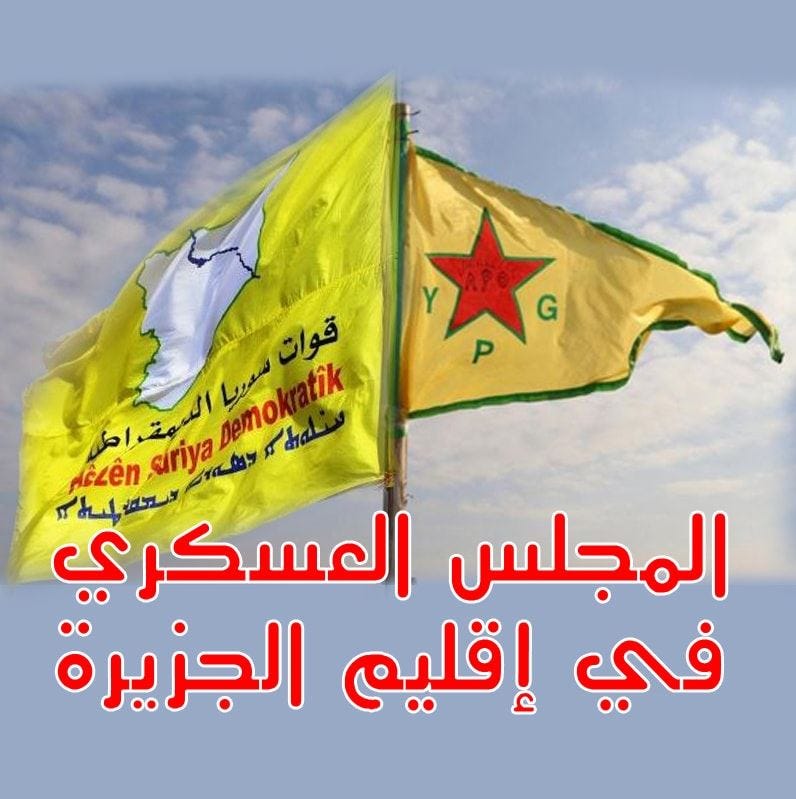
Despite the recent ceasefire agreement signed between Syrian president Ahmad al-Sharaa and SDF leader Mazloum Abdi following the Syrian government’s rapid advances in Raqqa and Dayr al-Zur provinces, fighting has resumed on multiple fronts as the government pushes further into Hasakah province and towards the town of Kobani along the border with Turkey. The SDF, for its part, has called for a wider mobilisation aimed mostly at the Kurdish population living under its rule.
Part of the reason for the collapse stems from differing expectations between the two sides on the nature of the agreements. For Sharaa, the agenda has been clear from the outset: a centralised government that does not allow for institutions of a rival or autonomous political project. For Abdi and the SDF, the goal at this point seems to be to preserve whatever they can of their ‘Autonomous Administration’ project. But to the extent that this project can survive at all, it is likely only to be in a de facto sense and not de jure, enforced perhaps by some external military intervention to prevent central government advances.
The following should also be noted:
(i) Insofar as the SDF had the veneer of a diverse coalition, that veneer has started to collapse with an increasing reversion back to the original core of the YPG (the armed wing of the PKK-linked PYD).
(ii) The SDF seems increasingly less concerned about seeking to preserve responsibility for the Islamic State-portfolio as a form of leverage, withdrawing its forces from the al-Hol camp and area and focusing more on just defence of primarily Kurdish areas.
To give a ground perspective on what is happening, below is an interview I conducted with Kajin Aloush, a Kurd and executive director of a media company. She is currently in the predominantly Syrian Kurdish city of Qamishli on the border with Turkey.